
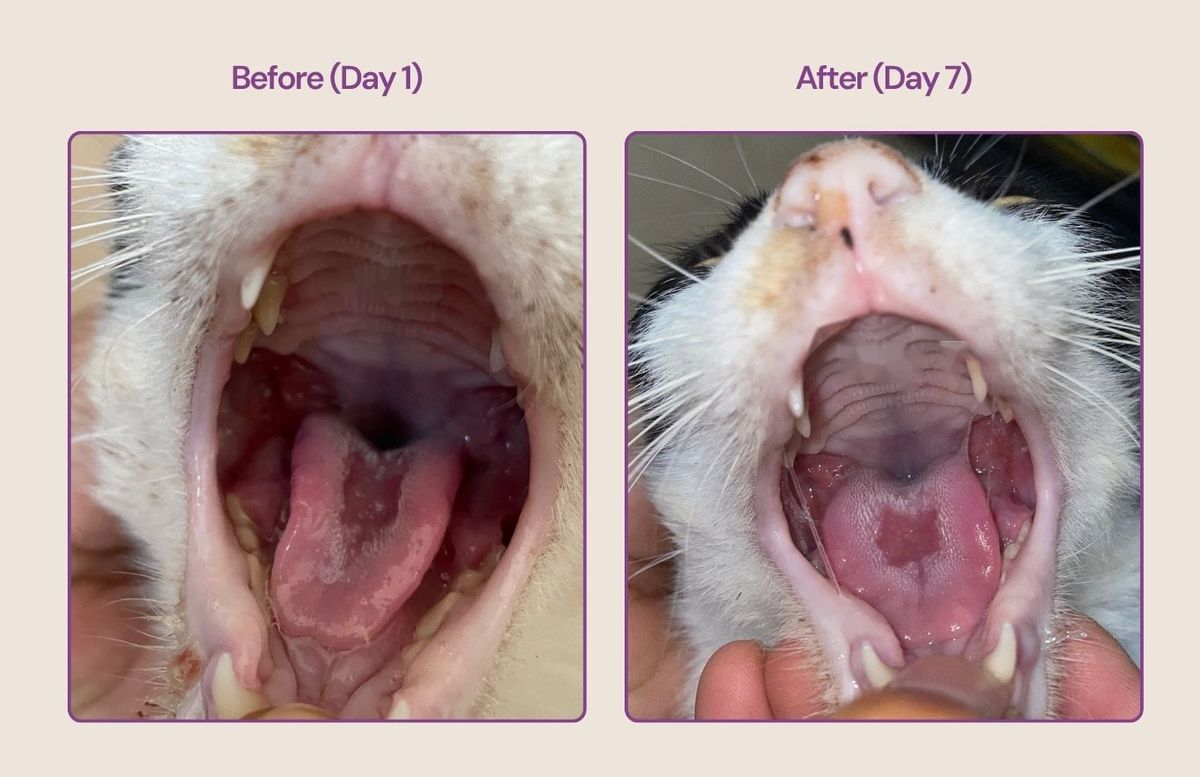
Feline Calicivirus (FCV) is a widespread upper respiratory infection in cats across Malaysia and Southeast Asia. Among the most distressing symptoms are painful oral ulcers that prevent cats from eating, drinking, or even resting comfortably.
For many pet owners, watching a beloved cat suffer from FCV feels overwhelming — particularly when conventional treatment only manages the symptoms rather than tackling the virus itself. Below is a real-world recovery account showing what 7 days of CaliciX treatment with EIDD-1931 can achieve.
The Starting Point: Severe Oral Ulceration from FCV
On the first day of treatment, the cat's oral condition was alarming. Deep, inflamed ulcers covered the palate and inner cheeks, with surrounding tissue swollen and extremely painful to the touch.
The cat had completely refused food. Persistent drooling and visible discomfort signalled rapid deterioration. Weight loss had already begun, and without prompt intervention, the outlook was poor.
Beginning CaliciX: A Direct-Acting Antiviral Approach
The cat was placed on CaliciX, which contains EIDD-1931 as its active compound. Unlike supportive care that only relieves pain or reduces secondary infections, EIDD-1931 works directly against FCV replication.
Its mechanism — lethal mutagenesis — sees the compound incorporated into the virus's genetic material during replication. Errors accumulate until the virus can no longer produce functional copies of itself, allowing the immune system to take over and the body to begin healing.
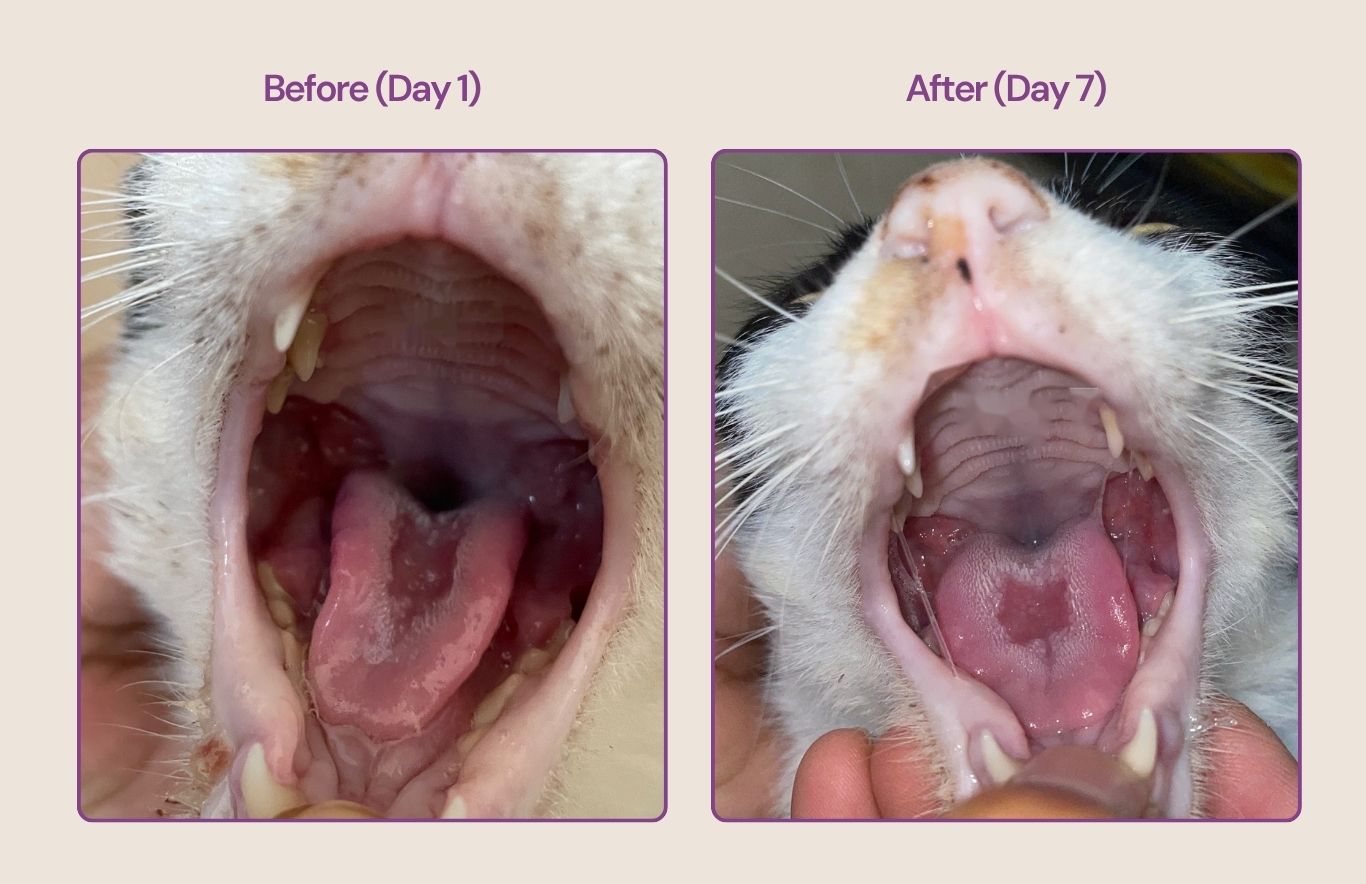
Day 7: Measurable Healing and Return of Appetite
After just one week of CaliciX treatment, the transformation was clear. The deep ulcers had begun to close, redness and inflammation had notably subsided, and — most importantly — the cat was eating again on its own.
This milestone, regaining independent eating, is what every owner of an FCV-affected cat hopes to see. Reaching it within seven days demonstrates the meaningful impact of targeting the virus directly.
Why Acting Early Makes All the Difference
FCV can escalate rapidly. A mild ulcer or bout of sneezing can develop into severe oral disease, limping syndrome, or in serious cases, virulent systemic FCV (VS-FCV) — a life-threatening form of the condition.
The longer treatment is delayed, the deeper ulcers grow, the higher the risk of secondary infections, and the longer recovery takes. This case illustrates clearly that early intervention shortens suffering and speeds healing.
What Sets CaliciX Apart from Conventional FCV Management
Standard FCV care relies on supportive measures: pain relief, soft food, fluid support, and antibiotics for secondary bacterial infections. These are valuable, but they do not stop the virus from continuing to replicate.
CaliciX with EIDD-1931 disrupts that replication cycle directly. For cats with severe or treatment-resistant FCV, CaliciX Max offers a higher-potency formulation at 30 mg of EIDD-1931 per capsule. Both products are formulated specifically for cats and easy to administer throughout the full treatment course.
Recognising FCV in Your Cat
- Ulcers or sores on the tongue, gums, or palate
- Drooling or reluctance to eat
- Sneezing or nasal discharge
- Lethargy or fever
- Limping or joint pain
- Red, inflamed gums (gingivostomatitis)
A veterinarian can confirm FCV through physical examination and diagnostic testing.
Don't Wait — Start Treatment Early
Real results. Real recovery. This cat went from severe FCV oral ulcers to visible healing within 7 days of CaliciX (EIDD-1931). If your cat has been diagnosed with Feline Calicivirus, early treatment makes all the difference. Speak with our team at basmifip.com.