
Feline calicivirus (FCV) is a common viral infection affecting cats of all ages, especially in environments where multiple cats live together. While some cats only develop mild respiratory signs, others experience persistent oral pain, difficulty eating, and chronic inflammation that can significantly affect their daily comfort and quality of life.
Because FCV does not always appear severe at the beginning, many cases are recognized only after symptoms progress. Understanding how this virus behaves helps cat parents seek veterinary care earlier and manage the condition more effectively.
What Is Feline Calicivirus?
Feline calicivirus is an RNA virus from the Caliciviridae family. It is often associated with upper respiratory illness but is also a major cause of chronic inflammatory disease in the mouth, including:
Gingivitis
Stomatitis
Recurrent mouth and tongue ulcers
Feline Chronic Gingivostomatitis (FCGS)
Unlike short-term infections, FCV may persist in the body and continue to trigger inflammation, particularly in adult cats.
How Calicivirus Spreads Among Cats
FCV spreads easily through:
Direct contact with infected cats
Saliva, nasal discharge, and eye secretions
Shared food bowls, litter boxes, bedding, and grooming tools
Transmission risk is highest in shelters, boarding facilities, breeding environments, and multi-cat households.
Some cats become carriers, meaning they continue shedding the virus even when they appear healthy.
Common Symptoms of Calicivirus in Cats
Early or General Signs
Fever
Reduced activity
Sneezing or nasal discharge
Decreased appetite
Oral and Dental Symptoms
As the disease progresses, oral involvement becomes more prominent. Cats may show:
Swollen or bleeding gums
Painful ulcers on the tongue, cheeks, or gums
Excessive drooling
Persistent bad breath
Difficulty chewing or swallowing
Cats in pain may approach food but stop eating, leading to weight loss and frustration.
Limping Associated With FCV
Some cats—especially kittens—develop temporary joint pain and limping, often referred to as limping calici. Veterinary evaluation is recommended to rule out other causes.
Severe or Systemic FCV
In rare cases, virulent systemic feline calicivirus (VS-FCV) may occur, causing swelling, high fever, and organ involvement. This presentation requires immediate veterinary care.
Feline Calicivirus in Kittens
Kittens are more vulnerable due to immature immune systems. Symptoms may worsen quickly, making early veterinary assessment especially important.
How Veterinarians Diagnose FCV
Diagnosis typically involves:
Physical and oral examination
Review of medical and environmental history
PCR testing for viral genetic material
Exclusion of other infections such as feline herpesvirus
Veterinarians also assess disease severity and chronic inflammation, which guides treatment planning.
Managing Feline Calicivirus in Cats
Managing feline calicivirus—especially in cats with oral disease—requires a targeted approach that addresses viral activity, inflammation, and pain. In veterinary practice, management may combine supportive care with antiviral-based treatment, depending on disease severity.
Antiviral Treatment Options for FCV
For cats diagnosed with FCV-associated disease, antiviral formulations may be used under veterinary supervision as part of a long-term management plan.
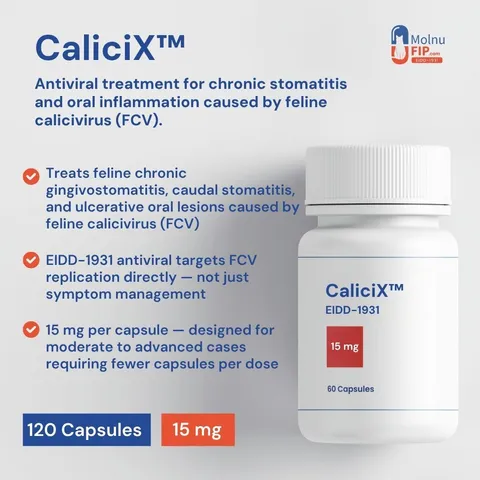
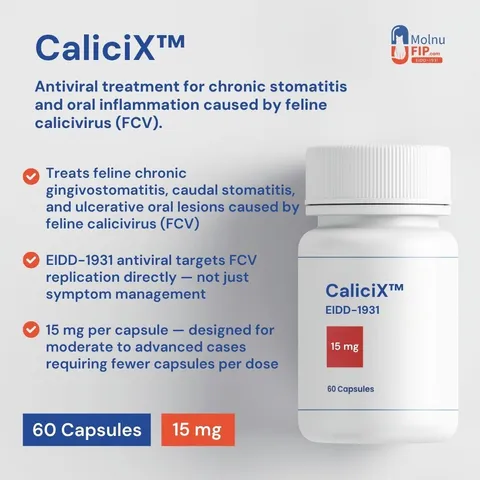
CaliciX™ (15 mg EIDD-1931)
CaliciX™ is an oral antiviral capsule formulated to support cats with moderate to advanced FCV-associated oral disease.
It may be included in veterinary-guided treatment plans for:
Chronic gingivitis and stomatitis
Oral and tongue ulcers related to FCV
Persistent mouth inflammation causing pain or difficulty eating
CaliciX™ is designed to support ongoing management, particularly in cats experiencing recurrent or chronic FCV symptoms.
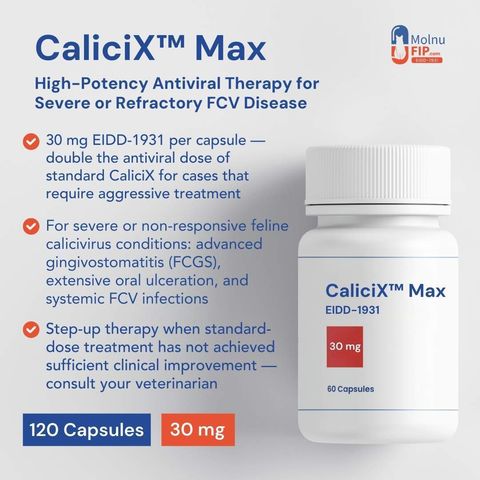
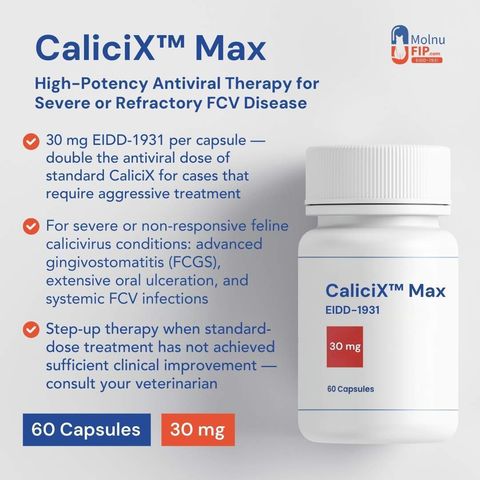
CaliciX™ Max (30 mg EIDD-1931)
CaliciX™ Max is a higher-strength antiviral formulation intended for severe, refractory, or high-viral-load FCV cases, where standard-strength therapy may be insufficient.
Veterinary-directed use may be considered in advanced presentations such as:
Severe Feline Chronic Gingivostomatitis (FCGS)
Deep lingual ulceration or extensive oral lesions
Virulent systemic feline calicivirus (VS-FCV)
The higher strength allows greater antiviral exposure with fewer capsules, when dosing is determined by a licensed veterinarian.
Important Veterinary Guidance
CaliciX™ and CaliciX™ Max are not substitutes for veterinary diagnosis or professional care
Dosage, duration, and suitability must be determined by a licensed veterinarian
Clinical response varies between individual cats
Supportive care—such as pain management, nutritional support, dental care, and treatment of secondary infections—remains an essential part of comprehensive FCV management.
Preventing Calicivirus in Cats
Risk reduction strategies include:
Core vaccinations
Stress reduction in multi-cat environments
Consistent hygiene and disinfection
Isolation of infected cats when possible
Vaccination may not fully prevent infection but often reduces disease severity.
When to Seek Veterinary Care
Consult a veterinarian if your cat shows:
Persistent drooling or mouth pain
Difficulty eating or swallowing
Weight loss
Limping or fever
Chronic oral inflammation
Early veterinary involvement improves comfort and long-term outcomes.
Key Takeaway
Feline calicivirus is more than a mild respiratory infection—it can cause lasting oral pain and chronic inflammation. With early recognition, veterinary guidance, and appropriate management—including antiviral support when indicated—many cats can maintain a better quality of life.
If you suspect FCV, seek professional veterinary advice promptly.
Free Consultation if Your Cat Is Affected by Feline Calicivirus (FCV)
If your veterinarian suspects or diagnoses your cat with Feline Calicivirus (FCV)—especially when symptoms such as oral ulcers, excessive drooling, difficulty eating, or chronic mouth inflammation are present—you don’t have to navigate this alone.
The BasmiFIP team is available to help you better understand your cat’s condition and discuss veterinary-guided management options for FCV, based on clinical experience and educational resources.
You can request a FREE consultation with our team through:
Website: basmifip.com
WhatsApp: +60 11-5627 4308
Instagram: basmifip