
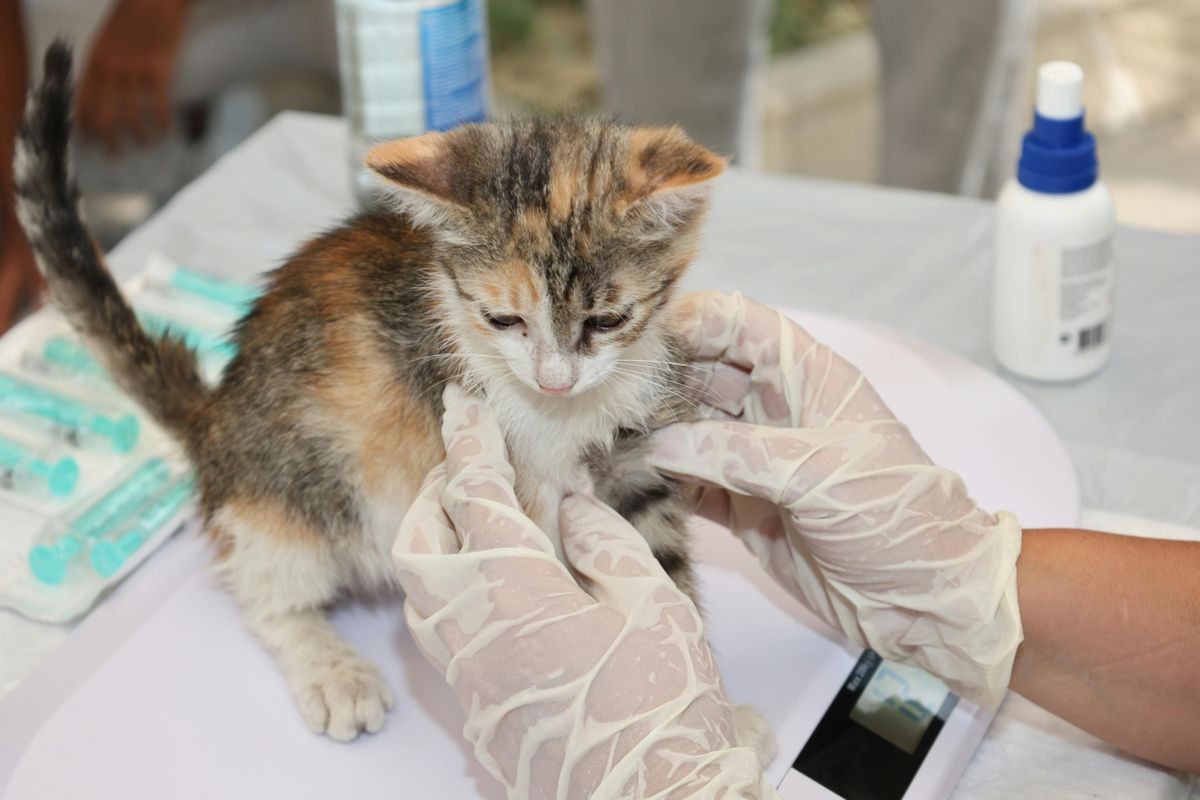
One of the most common questions BasmiFIP Malaysia receives during treatment is: "I have my cat's blood results — what do these numbers mean?" If you are managing FIP treatment at home in Malaysia and staring at a lab report from your vet in KL, Petaling Jaya, Penang, or Johor Bahru, this guide is for you. We explain every key marker, what each one tells you about your cat's current condition, and what to watch for at each stage of the 84-day protocol.
Why Blood Tests Are the Most Important Tool During FIP Treatment
GS-441524 suppresses viral replication gradually. Recovery happens week by week — not overnight. The challenge is that a cat can look physically better (eating, moving, playing) while internal markers are still elevated, or conversely, a cat can still look tired while blood tests show significant improvement happening below the surface.
Blood tests give you an objective picture that physical observation alone cannot. They tell you:
- Whether the current dose is working
- Whether the dose needs to be increased
- Whether the cat is on track for a full cure
- Whether there are any organ stress concerns to address
Without regular blood tests, you are managing treatment blind. With them, you have a clear, measurable feedback loop throughout the 84-day protocol and the 12-week observation period that follows.
Recommended blood test schedule:
- Week 2 after starting treatment
- Week 4–5
- Week 8
- End of 84-day protocol
- Week 4 and Week 8 of the 12-week observation period
The 4 Key Markers to Track
1. AGP — Alpha-1-Acid Glycoprotein
AGP is an acute-phase protein produced by the liver in response to inflammation. In cats with active FIP, AGP is almost always significantly elevated — making it one of the most reliable markers for both diagnosis and treatment monitoring.
Reference ranges:
- Normal: below 500 µg/mL
- Suspicious for FIP: 500–1,500 µg/mL
- Strongly consistent with active FIP: above 1,500 µg/mL
Note: Not all Malaysian vet labs offer AGP testing. It may require sending a sample to a reference laboratory. Check with your vet in advance — Idexx Laboratories and several veterinary universities in Malaysia can process AGP.
What happens during treatment: A cat responding well to GS-441524 will show a consistent downward trend in AGP from week to week. It does not need to reach normal immediately — the trend matters more than the absolute value at any single point. If AGP is not declining after 3–4 weeks of treatment, contact our team via WhatsApp to evaluate whether a dose adjustment is needed.
2. Globulin
Globulin is a group of blood proteins that includes antibodies and inflammatory proteins. In FIP, globulin rises significantly because the immune system is in a state of chronic, dysregulated inflammation.
Normal range in cats:
- 26–51 g/L (may vary slightly between labs)
In active FIP:
- Globulin commonly reaches 60–100 g/L or higher
- Values above 60 g/L alongside clinical symptoms are strongly consistent with FIP
What happens during treatment: Globulin decreases slowly as viral activity is suppressed. It is typically one of the last markers to return to normal — do not be alarmed if globulin is still elevated at week 4 or even week 6, as long as the trend is consistently downward. Sudden increases after a period of decline warrant immediate contact with our team.
3. Albumin
Albumin is the main blood protein produced by the liver. In FIP, albumin falls for two reasons: the liver prioritises producing inflammatory proteins instead, and in wet FIP, protein leaks into accumulated fluid in the abdomen or chest.
Normal range in cats:
- 23–35 g/L
In active FIP:
- Albumin commonly drops below 20 g/L, and in severe cases to 10–15 g/L
What happens during treatment: Rising albumin is one of the clearest, most reliable signs of recovery. As inflammation decreases and the liver returns to normal function, albumin climbs back toward the normal range. Most cats show their first meaningful albumin increase between weeks 3 and 6 of treatment.
4. A:G Ratio — Albumin to Globulin Ratio
The A:G ratio is the single most referenced value in FIP diagnosis and monitoring. It is calculated simply:
A:G Ratio = Albumin ÷ Globulin
Malaysian vets and labs will typically include this in a standard biochemistry panel, or you can calculate it yourself from the albumin and globulin values.
Interpretation guide:
| A:G Ratio | What It Means |
|---|---|
| Above 0.8 | Normal — FIP is unlikely |
| 0.5 – 0.8 | Borderline — evaluate with other markers |
| 0.4 – 0.5 | Suspicious — assess alongside clinical signs |
| Below 0.4 | Strongly consistent with active FIP |
| Below 0.3 | Severe FIP — begin treatment immediately |
What happens during treatment: As albumin rises and globulin falls, the A:G ratio improves. The target before entering the 12-week observation period is an A:G ratio consistently above 0.8. If the ratio plateaus between 0.5 and 0.7 without further improvement after several weeks, a dose adjustment may be needed.
Supporting Markers — Also Worth Tracking
Hematocrit / PCV (Packed Cell Volume)
Hematocrit measures the percentage of red blood cells in the blood. Mild to moderate anaemia is very common in active FIP due to chronic inflammation suppressing red blood cell production.
Normal range in cats: 30–45%
In active FIP: Hematocrit commonly drops to 15–25%. Below 15% indicates severe anaemia requiring immediate attention.
Rising hematocrit during treatment is a positive sign — it indicates that inflammation is decreasing and the bone marrow is recovering normal function.
Liver Markers — ALT and AST
ALT (alanine aminotransferase) and AST (aspartate aminotransferase) measure liver cell damage. While not FIP-specific, these values are important to monitor because GS-441524 is processed by the liver daily throughout the 84-day protocol.
Mildly elevated ALT and AST are common in active FIP due to inflammation. If these values rise significantly during treatment — particularly above 3x the upper normal limit — consider adding liver support. BasmiFIP Malaysia's LiverRx™ is formulated specifically to protect and support liver function during FIP treatment.
Kidney Markers — BUN and Creatinine
BUN (blood urea nitrogen) and creatinine measure kidney function. These are particularly important for senior cats or cats with pre-existing kidney concerns.
If BUN or creatinine rises significantly during treatment, contact our team. KidneyRx™ is available from BasmiFIP Malaysia to support kidney function throughout the protocol.
A Typical Recovery Pattern: What the Numbers Look Like
Here is an example of what blood test results look like in a cat responding well to GS-441524 treatment:
| Marker | Before Treatment | Week 4 | Week 8 | End of 84 Days |
|---|---|---|---|---|
| AGP | 3,200 µg/mL | 1,800 µg/mL | 900 µg/mL | 380 µg/mL |
| Globulin | 82 g/L | 65 g/L | 50 g/L | 36 g/L |
| Albumin | 13 g/L | 17 g/L | 24 g/L | 31 g/L |
| A:G Ratio | 0.16 | 0.26 | 0.48 | 0.86 |
| Hematocrit | 18% | 23% | 30% | 38% |
The absolute values matter less than the direction of change — consistent improvement across all markers week over week is what confirms the treatment is working.
Warning Signs to Report to BasmiFIP Malaysia Immediately
Contact our team via WhatsApp without delay if you see any of the following:
- AGP not decreasing after 3–4 weeks of treatment
- Globulin increasing after an initial period of decline
- Albumin showing no upward trend after 4 weeks of treatment
- A:G ratio not improving after 5–6 weeks
- Hematocrit continuing to fall during treatment
- ALT or AST rising above 3x the upper normal limit
- BUN or creatinine increasing significantly
These signs do not necessarily mean treatment has failed — they most often indicate a dose adjustment is needed, or that an additional factor requires evaluation. Early reporting gives us the best opportunity to course-correct.
Where to Get Blood Tests for Your Cat in Malaysia
Most veterinary clinics and animal hospitals across Malaysia offer standard CBC and biochemistry panels. For AGP specifically, you may need to request it in advance as it is not always part of a standard panel.
Locations where blood tests are commonly available:
- KL and Klang Valley: Extensive network of vet clinics with in-house or same-day lab results
- Penang, Johor Bahru, Ipoh: Well-equipped veterinary hospitals with full biochemistry capabilities
- Smaller towns: Standard CBC and biochemistry panels widely available; AGP may require sample referral
Once you have your results, photograph the lab report and send it to our team via WhatsApp. Blood test interpretation is part of the free consultation included with every BasmiFIP Malaysia purchase.
Frequently Asked Questions
What does a low A:G ratio mean in my cat's blood test? An A:G ratio below 0.4 is strongly consistent with active FIP — it reflects low albumin (from protein loss and redirected liver function) and high globulin (from chronic inflammatory response). Combined with clinical symptoms, it is one of the strongest diagnostic indicators available without a PCR test.
My cat's AGP is 2,800 µg/mL — does this mean FIP? AGP above 1,500 µg/mL alongside symptoms such as fever, lethargy, and reduced appetite is strongly consistent with FIP. Contact our team via WhatsApp for a free assessment.
How often should I do blood tests during FIP treatment in Malaysia? We recommend testing at week 2, week 4–5, week 8, at the end of the 84-day protocol, and at week 4 and week 8 of the 12-week observation period. More frequent testing may be recommended for cats with slow response or abnormal organ markers.
My cat's globulin is still high at week 6 — is the treatment working? Globulin is typically one of the last markers to normalise. A value that is consistently decreasing — even if still above normal range — combined with improving albumin and A:G ratio is a positive sign. Send us your full blood results via WhatsApp for a detailed interpretation.
Can BasmiFIP Malaysia help me interpret my cat's blood test results? Yes — blood test interpretation is included in the free consultation that comes with every purchase. Send your lab report to our team via WhatsApp at any point during treatment.
Conclusion
Reading FIP blood test results does not need to be overwhelming. The four markers that matter most — AGP, globulin, albumin, and A:G ratio — each tell part of the recovery story. What you are looking for is not instant normalisation, but a consistent trend in the right direction week after week. The BasmiFIP Malaysia team is available to interpret every blood test result throughout your cat's full 84-day treatment and 12-week observation period, at no additional cost.
Send your cat's blood test results to BasmiFIP Malaysia via WhatsApp or visit basmifip.com
Related reading: