
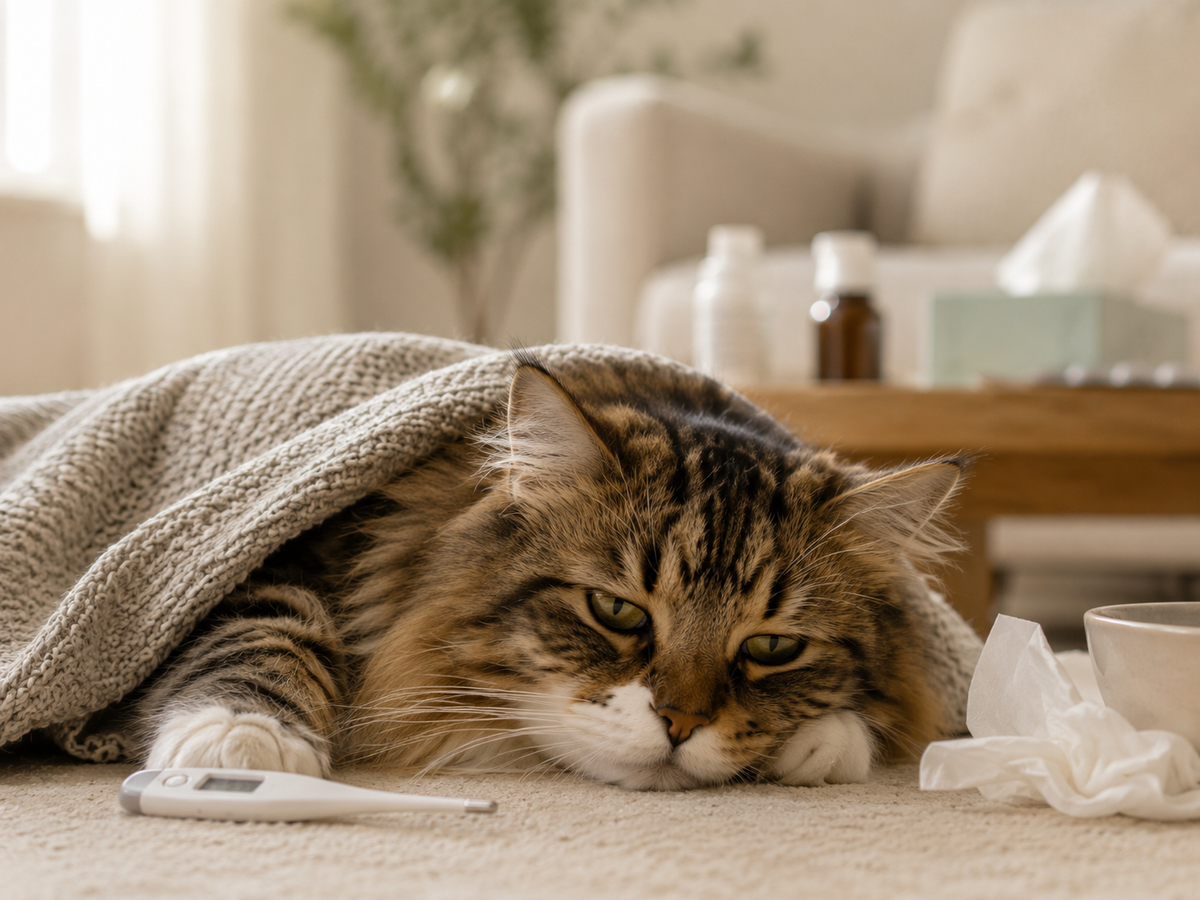
Mouth ulcers and heavy drooling are two of the most common signs of Feline Calicivirus (FCV), a contagious viral infection that often shows up as painful sores on the tongue, gums, or lips. If your cat is drooling, struggling to eat, or has visible ulcers in the mouth, FCV is a likely cause, and your veterinarian can confirm it with an exam and testing. The good news is that there is a clear path forward, and many families have walked it before you.
You are not alone in this. FCV is one of the most widespread upper respiratory and oral viruses in cats, and with the right care, most cats can feel comfortable again.
What is feline calicivirus (FCV)?
Feline Calicivirus (FCV) is a highly contagious virus that affects a cat's mouth, gums, and upper respiratory tract. It is one of the leading causes of mouth ulcers, drooling, and oral pain in cats, and it spreads easily between cats through saliva, sneezes, and shared bowls.
FCV is a virus, not a bacterial infection. That difference matters, because it shapes how the disease is treated and why some common medicines do not work against it.
The virus can range from mild to severe. Some cats have a brief bout of mouth sores and recover, while others develop ongoing, painful inflammation that needs longer support alongside your veterinarian.
What are the main symptoms of feline calicivirus?
The main symptoms of feline calicivirus are mouth ulcers, drooling, and oral pain, often along with sneezing, a runny nose, and loss of appetite. Mouth ulcers and excessive drooling are the most recognizable signs, and they usually point to inflammation inside the mouth.
Here are the common signs Pawrents in Malaysia tend to notice first:
- Ulcers or sores on the tongue, gums, lips, or roof of the mouth
- Heavy drooling, sometimes with a foul smell
- Difficulty eating or refusing food, especially hard kibble
- Pawing at the mouth or face
- Sneezing, nasal discharge, or watery eyes
- Fever and low energy
- Red, swollen, or bleeding gums
Not every cat shows every sign. A cat with a mild case may only drool a little, while a cat with severe inflammation may stop eating altogether.
Why does feline calicivirus cause mouth ulcers and drooling?
Feline calicivirus causes mouth ulcers because the virus directly damages the lining of the mouth, creating raw, painful sores. Drooling follows because those ulcers make swallowing painful, so saliva builds up and spills out.
The ulcers often start as small blisters that break open into shallow sores. They commonly appear on the tongue, but they can also form on the gums, lips, and hard palate.
When the mouth hurts, cats eat less. That is why a drooling cat who suddenly avoids food should be seen by your veterinarian quickly, before dehydration or weight loss sets in.
What is feline chronic gingivostomatitis (FCGS)?
Feline chronic gingivostomatitis (FCGS) is a severe, long-lasting inflammation of the mouth and gums that is strongly linked to feline calicivirus. It causes intense pain, widespread ulcers, and inflammation that can extend to the back of the mouth, an area called the caudal region.
Cats with FCGS often have a very hard time eating. They may cry at the food bowl, drop food, or lose weight even when they are hungry.
FCGS is one of the more difficult forms of FCV-related disease. Some cats with severe stomatitis do not respond fully to dental extractions alone, and these cases need a treatment plan that targets the virus, guided by your veterinarian.
How is feline calicivirus diagnosed?
Feline calicivirus is diagnosed through a physical exam of the mouth combined with your cat's history and, when needed, laboratory testing such as PCR swabs. Your veterinarian will look at the ulcers, check the gums, and rule out other causes of oral pain.
Diagnosis matters because mouth ulcers and drooling can have several causes. Dental disease, kidney issues, and other infections can look similar from the outside.
A clear diagnosis gives you a clear direction. Once your veterinarian confirms FCV, you can move forward with a plan that actually targets the virus.
Do antibiotics treat feline calicivirus?
No, antibiotics do not treat feline calicivirus, because FCV is a virus and antibiotics only work against bacteria. Antibiotics can help control a secondary bacterial infection that sometimes develops on top of FCV, but they do not act on the virus itself.
This is a key point many Pawrents miss. A cat may improve a little on antibiotics if there is a bacterial component, then relapse once the course ends, because the underlying virus was never addressed.
To target the virus, antiviral therapy is used. This is where the CaliciX product line comes in, always under veterinary guidance.
How is feline calicivirus treated?
Feline calicivirus is treated with supportive care for comfort and, for the virus itself, antiviral therapy under veterinary guidance. Supportive care can include pain relief, soft food, fluids, and dental care, while antiviral treatment targets the underlying FCV.
BasmiFIP offers an antiviral line built for FCV called CaliciX, which uses the ingredient EIDD-1931.
- CaliciX uses EIDD-1931 at 15 mg per capsule. It is intended for mild to moderate FCV, such as gingivitis, stomatitis, and mouth ulcers.
- CaliciX Max uses EIDD-1931 at 30 mg per capsule. It is intended for severe or refractory FCV, such as severe FCGS, caudal stomatitis, ulcerative stomatitis that has not responded to extractions, viral glossitis, and large or high-viral-load cats.
Your veterinarian helps you decide which strength fits your cat's situation.
CaliciX and CaliciX Max at a glance
| Product | EIDD-1931 per capsule | Best for |
|---|---|---|
| CaliciX | 15 mg | Mild to moderate FCV: gingivitis, stomatitis, mouth ulcers |
| CaliciX Max | 30 mg | Severe or refractory FCV: severe FCGS, caudal stomatitis, ulcerative stomatitis unresponsive to extractions, viral glossitis, large or high-viral-load cats |
How is CaliciX dosed by weight?
CaliciX and CaliciX Max are both dosed by your cat's weight, given as capsules every 12 hours. The dosing is the same structure for both strengths, and your veterinarian confirms the right plan for your cat.
| Cat weight | Dose (every 12 hours) |
|---|---|
| Under 2.5 kg | 1 capsule |
| 2.5 to 5 kg | 2 capsules |
| Over 5 kg | 3 capsules |
Always follow your veterinarian's instructions on duration and any adjustments. Do not change the dose on your own.
An important safety note for breeding cats
EIDD-1931, the ingredient in CaliciX and CaliciX Max, should never be given to pregnant, nursing, or breeding cats. This is a firm safety rule, because EIDD-1931 carries a risk to developing kittens.
If your cat is pregnant, nursing, or part of a breeding program, tell your veterinarian right away. There are other ways to keep her comfortable while protecting her kittens.
How can you keep a cat with FCV comfortable at home?
You can keep a cat with FCV comfortable at home by offering soft, warm food, keeping the face clean, and making sure she stays hydrated. Comfort care supports your cat while the antiviral treatment, guided by your veterinarian, works on the virus.
Here are practical steps many Pawrents find helpful:
- Offer soft, wet, or gently warmed food so it is easier to eat.
- Provide fresh water at all times, and watch closely for dehydration.
- Wipe away drool gently with a soft, damp cloth to prevent skin irritation.
- Keep your cat warm, calm, and away from other cats to limit spread.
- Disinfect bowls, bedding, and litter areas, since FCV spreads easily.
- Keep every follow-up appointment with your veterinarian.
Small comforts add up. A cat who can eat without pain heals more easily and keeps her strength up.
Where do supportive nutraceuticals fit in?
Supportive nutraceuticals like LiverRx and KidneyRx are organ-support supplements, not antivirals, so they do not treat the FCV virus itself. They are used only as adjunct support alongside veterinary-guided treatment, when your veterinarian feels they are appropriate for your cat.
LiverRx is formulated to support liver health, and KidneyRx is formulated to support kidney health. Neither one acts against FCV.
Think of them as part of overall wellbeing, never as a replacement for proper antiviral care. Your veterinarian can tell you whether they have a place in your cat's plan.
How contagious is feline calicivirus to other cats?
Feline calicivirus is very contagious to other cats, spreading through saliva, nasal discharge, sneezes, and shared items like bowls and bedding. A single sick cat in a multi-cat home can pass the virus to others quickly.
This is why isolation and hygiene matter so much during an outbreak. Keeping a sick cat separated, washing your hands, and disinfecting shared surfaces all help reduce spread.
FCV does not infect people. The risk is to other cats, so your focus is on protecting the feline members of your household.
FAQ
Is drooling always a sign of feline calicivirus?
No, drooling is not always FCV, but it is one of the most common signs, especially when paired with mouth ulcers and trouble eating. Drooling can also come from dental disease, nausea, or other oral problems, so your veterinarian should examine your cat to find the cause.
Can feline calicivirus go away on its own?
Mild cases of FCV sometimes improve with supportive care, but many cats, especially those with severe or chronic mouth inflammation, need targeted antiviral treatment guided by a veterinarian. Leaving severe FCV untreated can lead to ongoing pain and weight loss, so it is best to have your cat evaluated.
What is the difference between CaliciX and CaliciX Max?
CaliciX contains EIDD-1931 at 15 mg per capsule and is intended for mild to moderate FCV, while CaliciX Max contains EIDD-1931 at 30 mg per capsule and is intended for severe or refractory FCV. Your veterinarian helps you choose the right strength based on your cat's condition.
Do I still need to treat my cat if antibiotics seemed to help?
Yes, because antibiotics only address secondary bacterial infections and do not act on the FCV virus itself. If your cat improved briefly on antibiotics and then relapsed, the underlying virus was likely never treated, so talk with your veterinarian about antiviral options.
Can I give CaliciX to a pregnant cat?
No, CaliciX and CaliciX Max contain EIDD-1931, which should never be given to pregnant, nursing, or breeding cats. Tell your veterinarian if your cat falls into any of these groups so a safer comfort plan can be arranged.
Take the next step for your cat
If your cat is drooling, refusing food, or showing painful mouth ulcers, you do not have to figure it out alone. You can explore the FCV treatment options and reach out to the BasmiFIP team to learn more, and always work closely with your own veterinarian on the right plan. With the proper diagnosis and care, there is a clear path toward comfort and recovery for your cat.