
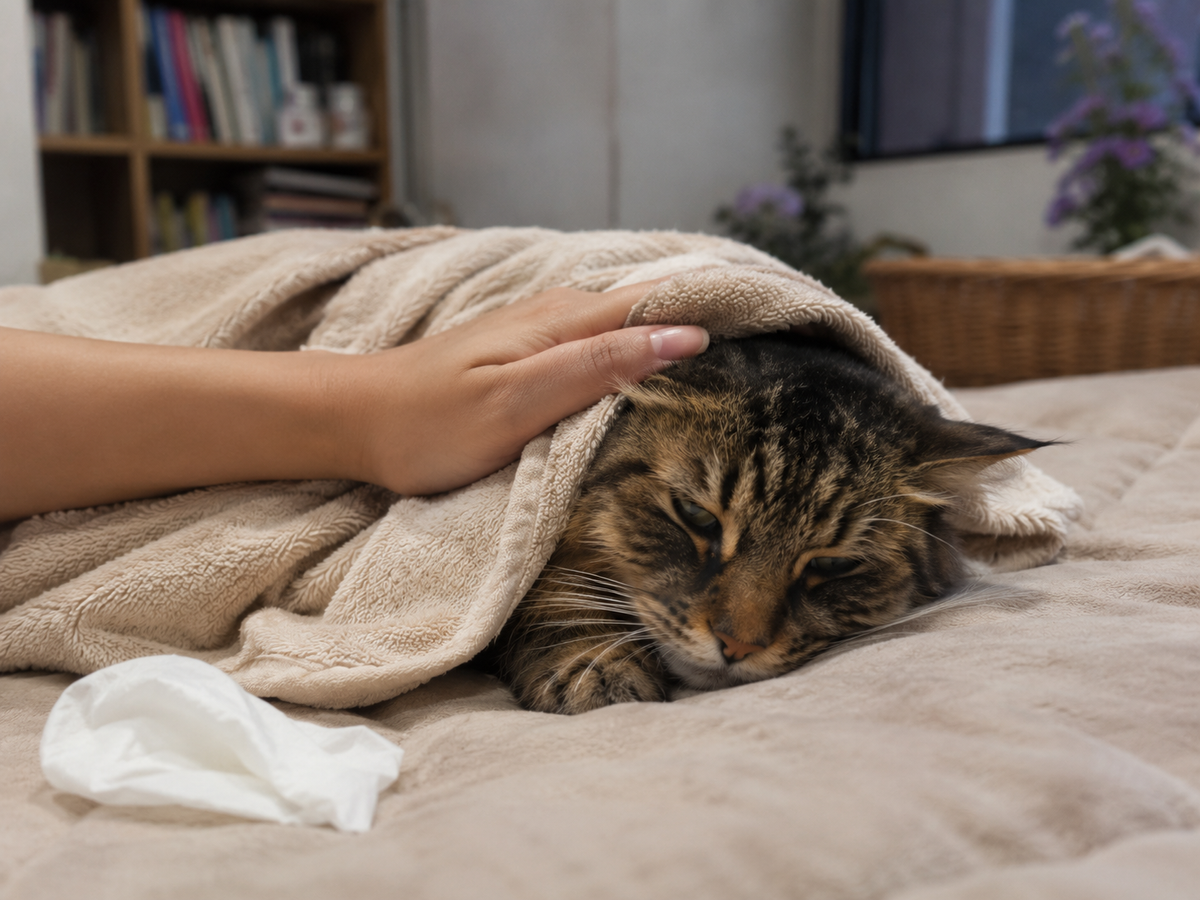
Key takeaway: Feline Infectious Peritonitis (FIP) usually starts with a fever that will not go away, lethargy, and a loss of appetite, then progresses into one of four forms: wet, dry, ocular, or neurological. The earlier you spot these signs and confirm the diagnosis with your veterinarian, the stronger your cat's recovery journey can be. Since 2019, more than 100,000 cats have been treated with GS-441524, so you are not facing this alone.
FIP can feel frightening when you first hear the name. But knowing the signs gives you power. This guide walks you through each symptom, form by form, so you know what to watch for and when to act.
What is Feline Infectious Peritonitis (FIP)?
Feline Infectious Peritonitis (FIP) is a serious viral disease in cats caused by a mutated form of the common feline coronavirus. Most cats carry the harmless gut version, but in some cats it mutates and spreads through the body, triggering FIP.
FIP was once considered hopeless. That is no longer true. With modern antiviral treatment built around GS-441524, many families in Malaysia and across Southeast Asia have seen their cats reach remission.
The disease appears in four forms: wet (effusive), dry (non-effusive), ocular, and neurological. Each form shows its own signs, and a single cat can show more than one.
What are the early warning signs of FIP in cats?
The earliest warning signs of FIP in cats are a persistent fever that does not respond to antibiotics, ongoing lethargy, reduced appetite, and slow weight loss. These signs are easy to miss because they look like many other illnesses, so they are often the first clue that something deeper is wrong.
FIP most often appears in cats under two years old, though any age can be affected. Kittens from shelters, catteries, or multi-cat homes carry a higher risk.
Watch for these early signals:
- A fever above the normal range that keeps returning even after antibiotics
- Tiredness or hiding more than usual
- Eating less, or refusing favourite food
- Gradual weight loss despite no obvious cause
- A dull, rough, or unkempt coat
- Stunted growth in kittens
If your cat shows a fever plus lethargy together, see your veterinarian promptly. These two signs side by side are a common early FIP pattern, and acting early matters.
What are the symptoms of wet (effusive) FIP?
Wet FIP, also called effusive FIP, is marked by fluid building up inside the body cavities, most often a swollen, rounded belly or laboured breathing. This is usually the faster-moving form, so the signs can appear over days to a few weeks.
The fluid is typically thick and yellow. When it collects in the abdomen, the belly looks bloated even as the rest of the body grows thin. When it collects in the chest, it presses on the lungs.
Key signs of wet FIP include:
- A swollen, fluid-filled abdomen (a "pot-bellied" look)
- Difficulty breathing or fast, shallow breaths
- Open-mouth breathing or reluctance to lie down
- Weight loss in the face and spine while the belly swells
- Ongoing fever and weakness
If your cat is struggling to breathe, treat it as an emergency and go to your veterinarian without delay.
What are the symptoms of dry (non-effusive) FIP?
Dry FIP, also called non-effusive FIP, produces little or no fluid and instead causes inflammation in the organs, so the signs are slower and harder to spot. It often shows as a long, vague decline rather than one dramatic symptom.
Because there is no obvious fluid swelling, dry FIP can take longer to diagnose. The body forms small areas of inflammation called granulomas in organs like the liver, kidneys, intestines, and lymph nodes.
Common signs of dry FIP include:
- Persistent low-grade fever
- Steady weight loss and poor appetite
- Enlarged organs your veterinarian may feel during an exam
- Jaundice (yellowing of the gums, eyes, or skin)
- Lethargy and general weakness over weeks
Dry FIP can also progress into ocular or neurological signs, so any unexplained decline deserves a veterinary workup.
What are the signs of ocular FIP in the eyes?
Ocular FIP affects the eyes and shows as cloudiness, colour changes in the iris, or inflammation inside the eye. It is one of the four separate forms of FIP and can appear on its own or alongside other forms.
The eye signs come from inflammation in the structures inside the eye. Owners often notice their cat's eyes simply look "different."
Look for these ocular signs:
- Cloudy or hazy appearance in one or both eyes
- A change in iris colour (often a brown or muddy tint)
- A visibly inflamed or red eye
- Uneven pupil sizes
- Bleeding or floating debris inside the eye
Ocular FIP is a distinct form from neurological FIP. If you notice any sudden eye changes, your veterinarian should examine your cat right away.
What are the signs of neurological FIP?
Neurological FIP affects the brain and spinal cord and shows as wobbliness, loss of balance, tremors, seizures, or behaviour changes. It is a separate form from ocular FIP and is considered one of the more challenging forms to treat.
The virus causes inflammation around the nervous system, which disrupts normal movement and coordination. Signs can come on gradually or quite suddenly.
Signs of neurological FIP include:
- Loss of balance or a wobbly, unsteady walk (ataxia)
- Tremors or muscle twitching
- Seizures
- Unusual behaviour, confusion, or disorientation
- Weakness or partial paralysis in the back legs
- Increased sensitivity to touch
Neurological and ocular FIP are two different forms, and they need higher antiviral dosing. Always confirm the form with your veterinarian before any treatment begins.
How are the four forms of FIP different?
The four forms of FIP differ by where the disease shows up: wet FIP causes fluid buildup, dry FIP causes organ inflammation, ocular FIP affects the eyes, and neurological FIP affects the brain and spinal cord. A cat can show more than one form at the same time.
| FIP form | Main signs | Notes |
|---|---|---|
| Wet (effusive) | Swollen belly, breathing trouble, fluid buildup | Often faster-moving |
| Dry (non-effusive) | Weight loss, fever, organ inflammation, jaundice | Slower, harder to spot |
| Ocular | Cloudy eyes, iris colour change, eye inflammation | A separate form from neurological |
| Neurological | Wobbliness, tremors, seizures, behaviour changes | Needs higher antiviral dosing |
Knowing the form matters because it guides the treatment plan and the dose your veterinarian will recommend.
How is FIP diagnosed in cats?
FIP is diagnosed by combining the cat's symptoms with veterinary tests, since no single home sign confirms it on its own. Your veterinarian will look at the full picture before starting treatment.
Diagnosis usually involves a few steps:
- A physical exam to check for fever, fluid, jaundice, and enlarged organs.
- Blood tests that often show specific protein and blood-count changes.
- Fluid analysis if there is fluid in the belly or chest.
- Imaging such as ultrasound when needed.
- Eye and neurological exams if those forms are suspected.
There is a clear path forward, and it starts with the right diagnosis. Do not start any antiviral before your veterinarian confirms FIP.
How is FIP treated, and what is the success rate?
FIP is treated with antiviral therapy, and the hero ingredient is GS-441524, given over a standard 84-day (12-week) protocol under veterinary supervision. In a UC Davis clinical trial, GS-441524 showed a 92% success rate, and since 2019 more than 100,000 cats have been treated.
BasmiFIP offers GS-441524 as an injectable antiviral (40 mg/ml, 99.4% purity, 8 ml vial), dosed daily by form: 6 mg/kg for wet FIP, 8 mg/kg for dry FIP, 10 mg/kg for ocular FIP, and 10 mg/kg for neurological FIP.
For wet or dry FIP without eye or nervous-system signs, some families begin with EIDD-1931 oral capsules (15 mg per capsule). These capsules are for wet and dry FIP only, and are not used for ocular or neurological FIP, or for cats that are not eating and defecating normally.
A Dual Antiviral oral capsule (GS-441524 plus EIDD-1931) is another option once a cat is stable, usually after about 30 days of injections. In a dual-antiviral field study, Li and Cheah (2025) reported a 78.3% remission rate.
Important safety note: EIDD-1931 is potentially teratogenic, so it should never be used in pregnant, nursing, or breeding cats. Your veterinarian will choose the safest route for your cat.
A simple view of the treatment routes
| Route | Best for | Key detail |
|---|---|---|
| GS-441524 injectable | All forms, including ocular and neurological | Daily injection, 84-day protocol |
| EIDD-1931 capsules | Wet and dry FIP only | Not for ocular, neurological, or cats not eating/pooping |
| Dual Antiviral capsule | Stable cats, often after ~30 days of injections | 1 capsule per day, dosed by weight |
What should you avoid during FIP treatment?
During FIP treatment, you should avoid certain products that can interfere with recovery, including fluoroquinolone antibiotics, spot-on flea medications, lysine, and immune boosters. Always check with your veterinarian before giving any new product.
Some cats also benefit from organ support during their recovery journey. LiverRx and KidneyRx from RX Sciences are supportive nutraceuticals, not antivirals.
They do not treat FIP and should only be used as adjunct organ support alongside veterinary-guided antiviral treatment. Your veterinarian can advise whether they fit your cat's plan.
FAQ
What is the very first sign of FIP in cats?
The most common first sign is a persistent fever that does not respond to antibiotics, usually paired with lethargy and reduced appetite. Because these signs are easy to miss, see your veterinarian if a fever keeps returning.
Is wet FIP or dry FIP more serious?
Both are serious, but wet FIP often moves faster because fluid can build up in the belly or chest and affect breathing. Dry FIP develops more slowly and can be harder to spot, so any unexplained decline should be checked by your veterinarian.
Can FIP be treated successfully?
Yes, many cats reach remission with antiviral therapy built around GS-441524. A UC Davis clinical trial reported a 92% success rate, and the standard protocol runs 84 days under veterinary supervision.
Can I use EIDD-1931 capsules for ocular or neurological FIP?
No. EIDD-1931 oral capsules are for wet and dry FIP only. Ocular and neurological FIP are separate forms that are typically started on GS-441524 injections at 10 mg/kg, as guided by your veterinarian.
Are LiverRx and KidneyRx treatments for FIP?
No. LiverRx and KidneyRx are supportive nutraceuticals for organ support only. They do not treat the FIP virus and are used alongside, never instead of, veterinary-guided antiviral treatment.
You are not the first Malaysian Pawrent to face FIP, and your cat's odds are better than they have ever been. If you would like to understand the treatment options and the next steps, explore your cat's FIP treatment options with BasmiFIP and bring your questions to your own veterinarian. Together, you can map out a recovery journey that is right for your cat.